Mail Us any time
info@divinelifeparamedical.com


info@divinelifeparamedical.com
Eligibility:
Age Limit:
Course Duration
The Diploma in Critical Care Management (CCM) is a specialized healthcare program designed to train professionals in the management and care of patients in critical and life-threatening conditions. Critical care professionals work in Intensive Care Units (ICUs), Emergency Departments, and other high-dependency healthcare settings, where rapid decision-making and advanced clinical skills are essential. At Divine Life Para Medical College, this program equips students with both the technical expertise and the confidence to perform effectively in high-pressure medical environments.
The curriculum covers a broad spectrum of theoretical and practical training, including:
Anatomy & Physiology Relevant to Critical Care
Basics of Intensive & Emergency Care Medicine
Patient Assessment and Monitoring Techniques
Advanced Life Support & CPR
Critical Care Pharmacology
Management of Medical Emergencies (Cardiac, Respiratory, Trauma, etc.)
Infection Prevention & Control in Critical Care Units
Operation of ICU Equipment (Ventilators, Monitors, Infusion Pumps)
Multidisciplinary Team Coordination in Critical Care Settings
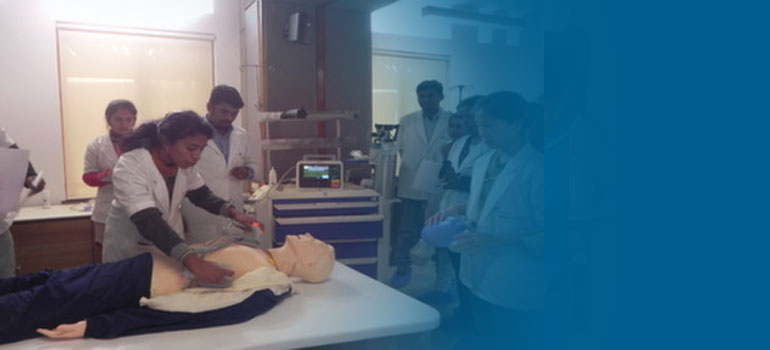
Simulation-based Emergency Training
Clinical Practice in ICU & Emergency Wards
The program duration is typically 1–2 years, with the first phase focusing on classroom learning and simulation labs, followed by 3–6 months of clinical training in reputed hospitals where students gain hands-on experience in ICU and emergency care environments.
Graduates of the CCM program are in demand across various healthcare sectors, including:
Critical Care Technician in ICUs & Emergency Departments
Emergency Medical Technician in Trauma Care Units
Assistant in Cardiac Care Units (CCU) and Neonatal Intensive Care Units (NICU)
Paramedic Support Staff for Ambulance & Emergency Services
Technician in High-Dependency Units (HDU)
Instructor in Basic Life Support (BLS) & Advanced Life Support (ALS) (with further certification)
With advanced education, such as a degree in Critical Care Technology or Nursing, graduates can move into senior roles like ICU Coordinator, Critical Care Specialist, or Clinical Educator.