Mail Us any time
info@divinelifeparamedical.com


info@divinelifeparamedical.com
Eligibility:
Age Limit:
Course Duration
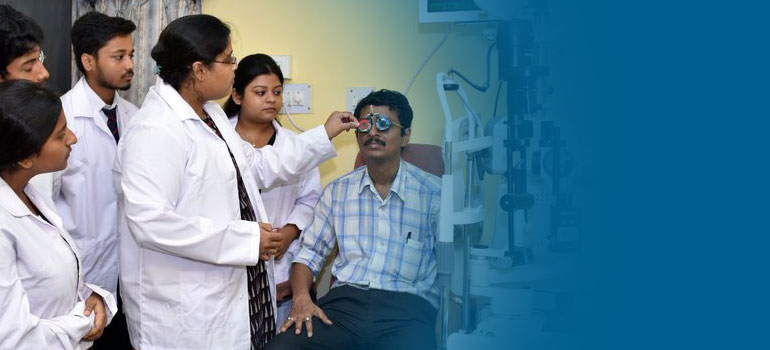
The Bachelor of Science in Optometry (B.Sc. Optometry) is a 4-year undergraduate program designed to train students in the science and practice of eye care, vision correction, and the management of ocular diseases. Optometrists play a vital role in primary eye healthcare, conducting vision tests, prescribing corrective lenses, and detecting eye conditions that may require medical or surgical intervention. At Divine Life Para Medical College, the program combines rigorous academic training with extensive clinical exposure, preparing graduates to serve in hospitals, eye care centers, and private practice.
The curriculum covers both theoretical knowledge and clinical skills essential for professional optometry practice, including:
Anatomy & Physiology of the Eye
Visual Optics & Refraction Techniques
Ocular Pathology & Pharmacology
Contact Lens Technology & Fitting Procedures
Low Vision Aids & Vision Rehabilitation
Pediatric Optometry & Binocular Vision
Diagnostic Instruments & Clinical Procedures
Management of Common Eye Diseases (Glaucoma, Diabetic Retinopathy, etc.)
Community Eye Health & Preventive Eye Care
Clinical Training in Vision Testing, Refraction, and Eye Condition Management
Years 1–3 focus on academic study, laboratory work, and supervised clinical training in the college’s optometry labs.
Year 4 is dedicated to a full-year clinical internship in reputed eye hospitals and vision care centers, where students gain real-world experience.
Graduates of the B.Sc. Optometry program have diverse career prospects, including:
Optometrist in Eye Hospitals & Clinics
Vision Care Specialist in Optical Retail Chains
Contact Lens Practitioner
Low Vision Rehabilitation Specialist
School Eye Screening Program Coordinator
Clinical Optometry Educator in Paramedical Colleges
Research Assistant in Eye Health and Vision Science
With advanced qualifications like *M.Sc. Optometry* or fellowships in specialized areas, graduates can establish independent optometry practices, become senior clinical consultants, or move into academic and research leadership positions.